Corelan Stack Masterclass @ BruCON 🇧🇪
Corelan Stack MasterClass with Peter Van Eeckhoutte at Brucon Mechelen, Belgium.

I remember years ago, pre-COVID era, I was looking for ways to understand how Exploit Development and Reverse Engineering worked. As curious as anyone in this field are, I embarked in a mission, I stumble upon crackMEs executables designed to explore few techniques in exploit development, but it was not sufficient. Fun tho! but insufficient.
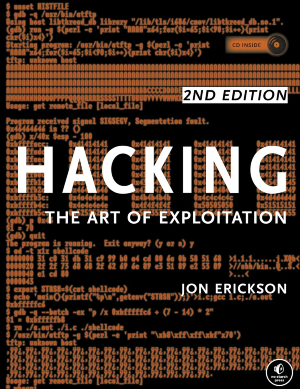
Then I took the matter seriously and bought one of the best books ever written -- "Hacking: The Art of Exploitation". Where I could play around with gdb and understand in deep how the machine processed instructions and memory management issues in Linux. I was impressed and I needed to know more...
Then, I found the Corelan Site packed with all the tutorials about Exploit Development and mona! I remember using Immunity Debugger at that time, glorious moments.
At that point I was checking the Corelan page to reserve a spot in the training, if you were lucky to have a spot! But it was a little difficult in my case, living in American Continent and bit short in training budget abroad, it was difficult to align the stars in this subject. So my path went to vendors with remote training.
Fast forward to this year, now I live in Europe with my family and the stars have aligned, Luck comes to those who wait.
Corelan Stack Masterclass
I attended the BruCON Spring Training from 22–24 April at Mechelen, Belgium, where I had the chance to fully immerse myself in hands-on cybersecurity training with Peter Van Eeckhoutte.
The training covers the following elements:
-
The x86 environment
- System Architecture
- Windows Internals
- Windows Memory Management
- Registers
- Introduction to Assembly
- Assembling & disassembling
- The Stack - concepts & mechanics
- WoW64
-
The exploit development lab environment
- Setting up the exploit developer lab
- Introduction to WinDBG/WinDBGX
- Using debuggers / debugger plugins to gather primitives
- Learn how to use mona.py directly from the author
- Stack Buffer Overflows
- Stack Mechanics & Stack Buffers
- How functions work. Calling conventions & more
- Saved Return Pointer Overwrites
- Stack Canaries/Cookies
- Structured Exception Handlers
- etc
-
Egg Hunters
- Egghunter techniques
- Egghunters on Wow64
- Syscall & EH based egghunters
- Egghunters for Windows 10/11
-
Bad Characters
- Identifying bad characters
- Avoiding bad characters
-
Metasploit framework Exploit Modules
- Writing exploits for the Metasploit Framework
- Porting exploits to the Metasploit Framework
-
ASLR
- Bypassing ASLR
-
Data Execution Prevention (DEP)
- Bypassing NX/DEP with ROP/COP/JOP
- Return Oriented Programming Templates & Frameworks
- Using mona.py to create ROP chains
- Troubleshooting mona generated ROP chains
- Finding/Resolving interesting functions for use in ROP
- ROP & badchars: ROP Runtime Patching (a.k.a. ROP Decoder)
-
Intro into x64 stack based exploitation
- x64 processes, memory map, registers
- Functions & calling conventions
- Structured Exception Handling
- Stack Buffer Overflow
- ROP
- Shellcode
-
FREE BONUS CHAPTER: Unicode buffers
- Effect of Widepage conversion
- Venetian alignment
- Venetian Shellcode
Three days of highly technical, hands-on training flew by in the blink of an eye once I was fully immersed in the environment created by Corelan Team. From the very first session, it was clear that this was not just another technical course—it was a masterclass in Exploit Development, delivered with precision, depth, and genuine passion.
What impressed me the most about Peter was the extraordinary level of expertise and the commitment to sharing it. He demonstrated a deep understanding of the subject matter and a sincere drive to transmit decades’ worth of knowledge, tools, methodologies, and hard-earned insights. Every explanation was grounded in real-world experience, and every lab exercise pushed us to think critically, troubleshoot creatively, and truly understand what was happening under the hood.
I feel incredibly honored—and honestly quite lucky—to have been part of one of these trainings. Opportunities to learn directly from Pwnstars who have shaped the field are rare, and the experience reinforced how valuable in-person, hands-on learning can be for complex technical domains like exploit development.
There is a profound difference between being physically present in a lab environment and attending a session through a videoconference. There are forms of knowledge transfer and learning that simply cannot be fully transmitted through TCP or UDP packets. Being surrounded by peers facing the same technical challenges created an atmosphere of focus, curiosity, and shared determination that elevated the entire learning experience.
Looking back, I can confidently say that all the previous trainings and self-study I’ve invested in over the years prepared me to attend this masterclass and truly take fully leverage the level of challenge it offered. I was able to engage deeply with the material, push my limits, and enjoy the process of solving complex problems alongside highly motivated professionals.
This training was not just about learning new techniques, it was about refining mindset, discipline, and problem-solving approaches. It reminded me that mastery in cybersecurity is a continuous journey, where every challenge felt like another set of push-ups: demanding, sometimes exhausting, but ultimately strengthening.